

Rural roads and water
Farmers can only sell what they can move. AVDP builds and rehabilitates feeder roads and farm tracks, and brings irrigation to sites that depend on rainfall.
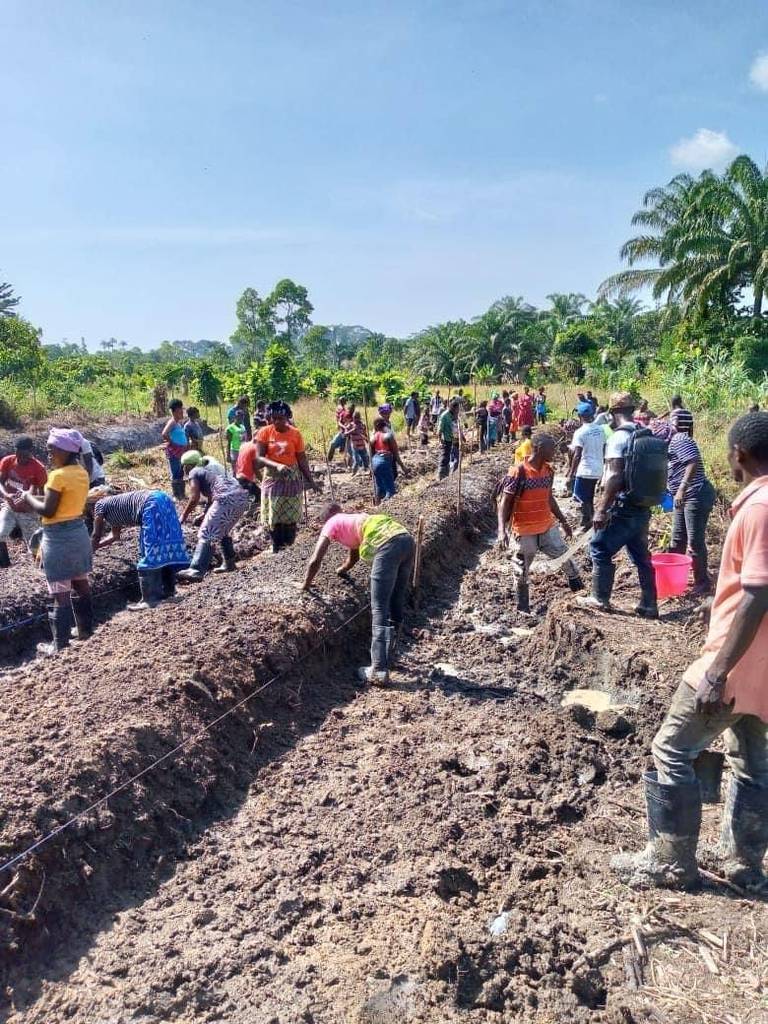
What AVDP does
- 420 km of feeder roads tendered for rehabilitation and construction
- Supervision of an additional 75 km of farm tracks
- 20 boreholes with irrigation systems across nine districts
A feeder road: from the farm to the market
Farmers can only sell what they can move. Feeder roads that stay open in the rains connect farms to buyers.
Step 1 of 5
Cut off in the rains
Many farming communities are reached only by tracks that turn to mud in the rainy season. Vehicles get stuck, and produce is carried out on foot or left to spoil.
Show as table
| Step | What happens |
|---|---|
| 1. Cut off in the rains | Many farming communities are reached only by tracks that turn to mud in the rainy season. Vehicles get stuck, and produce is carried out on foot or left to spoil. |
| 2. Rebuilding the road | AVDP is rehabilitating and building feeder roads, with 420 km tendered, and farm tracks that link fields and swamps to the road network. |
| 3. Built to last the rains | A raised surface, side drains and culverts carry water away from and under the road, so it stays open through heavy rain. |
| 4. Trucks reach the farms | Vehicles can now reach the village. Farmer groups gather their produce at a roadside point and sell together. |
| 5. To market, and back | Produce reaches the market faster and in better condition, and seed, fertiliser and services come back along the same road. |
How a solar borehole waters vegetables, and a village
AVDP is building solar-powered boreholes with irrigation so vegetable growers can farm through the dry season.
Step 1 of 6
Sunlight powers the pump
Solar panels turn sunlight into electricity for a pump at the bottom of the borehole. There is no fuel to buy and no generator to run.
Show as table
| Step | What happens |
|---|---|
| 1. Sunlight powers the pump | Solar panels turn sunlight into electricity for a pump at the bottom of the borehole. There is no fuel to buy and no generator to run. |
| 2. Water comes up from underground | The pump lifts groundwater up the borehole, even in the dry season when streams and hand-dug wells run low. |
| 3. A raised tank stores it | The water fills a tank on a tower. From there it flows out by gravity whenever it is needed, including after the sun goes down. |
| 4. Drip lines water the vegetables | Pipes carry the water to drip lines along each bed, which give every plant a little water at its roots and waste very little. |
| 5. Clean water for the community | In some communities the same borehole also has a tap, so families can collect water for drinking and cooking close to home. |
| 6. Vegetables through the dry season | With water all year, farmers keep growing tomato, pepper and onion after the rains end, and have more to eat and to sell. |
Related news and notices
Related procurement
All procurement notices- Invitation for bidsRe: Construction of Perimeter Fence Wall at Eight (8) Block Extension Service Facilities SLE-2000001544-0256-W-NCBDownload Word, (79 KB) for Re: Construction of Perimeter Fence Wall at Eight (8) Block Extension Service Facilities SLE-2000001544-0256-W-NCB
- Expression of interestConsultancy for the Supervision of Additional 75Km of Farm TracksDownload Word, (107 KB) for Consultancy for the Supervision of Additional 75Km of Farm Tracks
- Invitation for bidsConstruction of Twenty-20 Boreholes with Irrigation Systems in Sierra LeoneDownload Word, (77 KB) for Construction of Twenty-20 Boreholes with Irrigation Systems in Sierra Leone
- Invitation for bidsRehabilitation/Construction of 420Km of Feeder Roads in Sierra LeoneDownload Word, (76 KB) for Rehabilitation/Construction of 420Km of Feeder Roads in Sierra Leone