
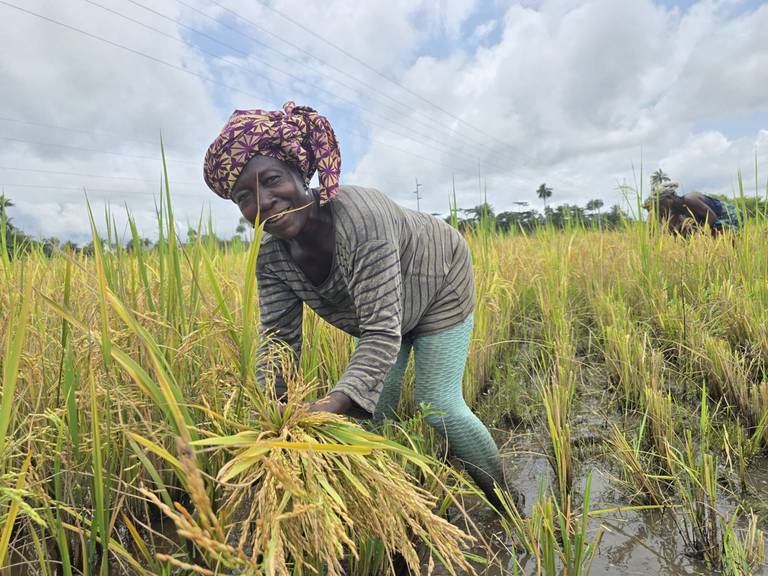
Rice in inland valley swamps
AVDP develops inland valley swamps so farming groups can grow rice through the year rather than for one season. Developed swamps let associations move to double and triple cropping.
What AVDP does
- Swamp development with farmer associations, including a 20-hectare site at Foindu, Kenema District
- Improved seed rice, power tillers, threshers and destoners for farmer groups
- Rice-processing equipment for model farms
From swamp to sack: how an IVS farmer grows and sells rice
Inland valley swamps with water control, improved seed and milling at agribusiness centres help rice farmers sell clean, bagged rice.
Step 1 of 6
Water control in the swamp
A canal, bunds and a control gate hold the right depth of water in the inland valley swamp, so the plots no longer flood and keep water between rains.
Show as table
| Step | What happens |
|---|---|
| 1. Water control in the swamp | A canal, bunds and a control gate hold the right depth of water in the inland valley swamp, so the plots no longer flood and keep water between rains. |
| 2. Transplanting with the rains | In the rainy season farmers transplant rice seedlings into the flooded plots in straight rows, using improved seed from the agribusiness centre. |
| 3. The rice grows and ripens | With steady water the rice grows strongly. Water control lets many plots give two or even three harvests a year. |
| 4. Harvest | When the grains turn golden the rice is cut, threshed and dried. The grain still in its husk is called paddy. |
| 5. Milling at the agribusiness centre | Farmers bring their paddy to the agribusiness centre, where AVDP-supplied milling and destoning machines remove husks and stones, leaving clean white rice. |
| 6. Bagged and sold | The rice is bagged and sold to the centre, which sells it in bulk to wholesale buyers. Centres also help with packaging and branding. |
Rice: from seed to market
What AVDP does at each step, from the seed a farmer plants to the buyer who pays for the harvest.
Seed
Improved seed rice for farmer groups: 2,758 bushels handed over in June 2024.
Land and water
Inland valley swamps developed so groups can grow rice more than once a year.
Farming
Farmer Field Schools teach climate-smart practice; power tillers for land preparation.
Harvest and processing
Threshers, destoners and winnowers, with grain stores and drying floors.
To market
Feeder roads and farm tracks link swamps to buyers; groups sell together.
Show as table
| Step | What AVDP does |
|---|---|
| Seed | Improved seed rice for farmer groups: 2,758 bushels handed over in June 2024. |
| Land and water | Inland valley swamps developed so groups can grow rice more than once a year. |
| Farming | Farmer Field Schools teach climate-smart practice; power tillers for land preparation. |
| Harvest and processing | Threshers, destoners and winnowers, with grain stores and drying floors. |
| To market | Feeder roads and farm tracks link swamps to buyers; groups sell together. |
The farming year in Sierra Leone
When each crop is planted and harvested. Months are typical; the rains, and so the work, can start earlier or later.
- Rice (main season)Upland and swamp rice. Early upland harvests can start at the end of August.
- Land preparation
- Planting
- In the field
- Harvest
Show as table
| Crop | Land preparation | Planting | In the field | Harvest | Note | Source |
|---|---|---|---|---|---|---|
| Rice (main season) | February to March | April to July | August | September to December | Upland and swamp rice. Early upland harvests can start at the end of August. | FAO GIEWS country briefs, 2021–2025; FEWS NET, 2016–2017 |
Related news and notices
Related news
All news and stories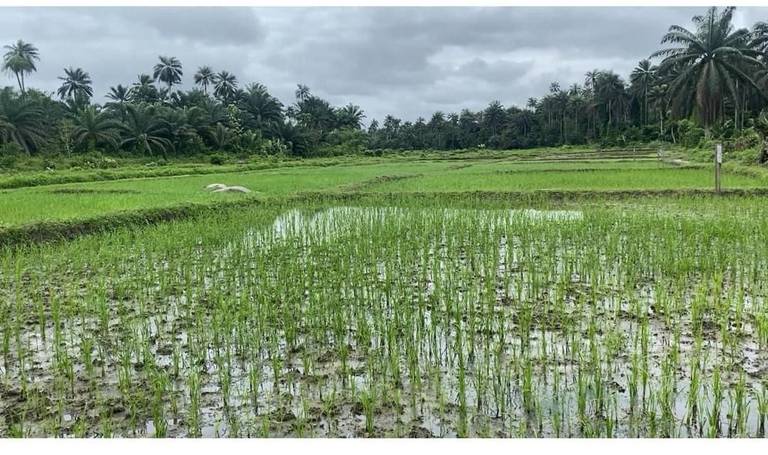 Video
Stories from the AVDP IVS rice field
This isn't just a story about Inland Valley Swamp (IVS) development; it’s about a family rewriting their future. With the help of AVDP IVS development, Goba's IVS Association has moved beyond…
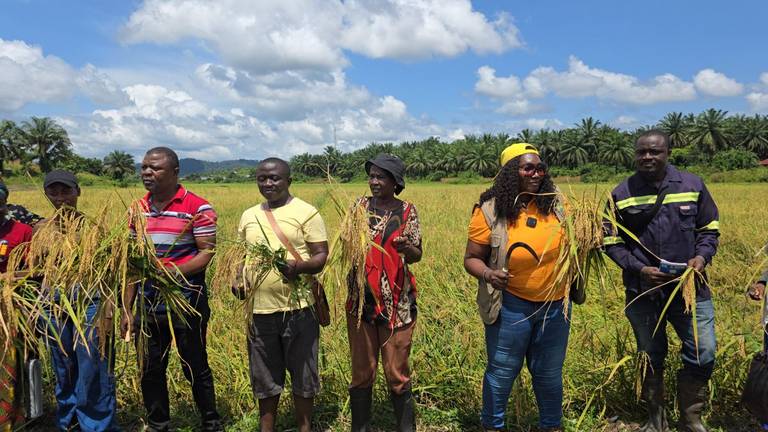
Harvest Season in Full Swing!
It's yet another season of joy and abundance as IVS rice harvesting continues across our supported communities — over 4,000 hectares cultivated. In every new harvest, our fields reflect more than…