
Our work
AVDP supports smallholder farmers along the whole value chain, from developing land and supplying inputs to processing, market access and rural infrastructure.
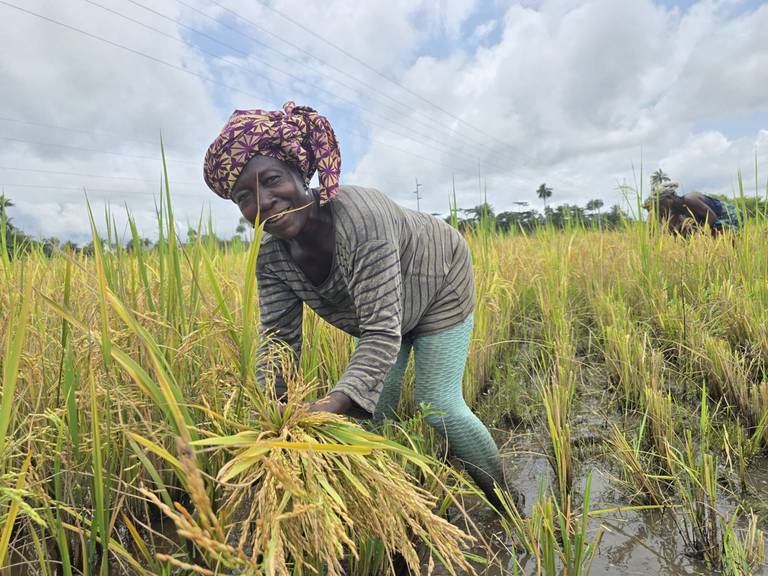
Rice in inland valley swamps
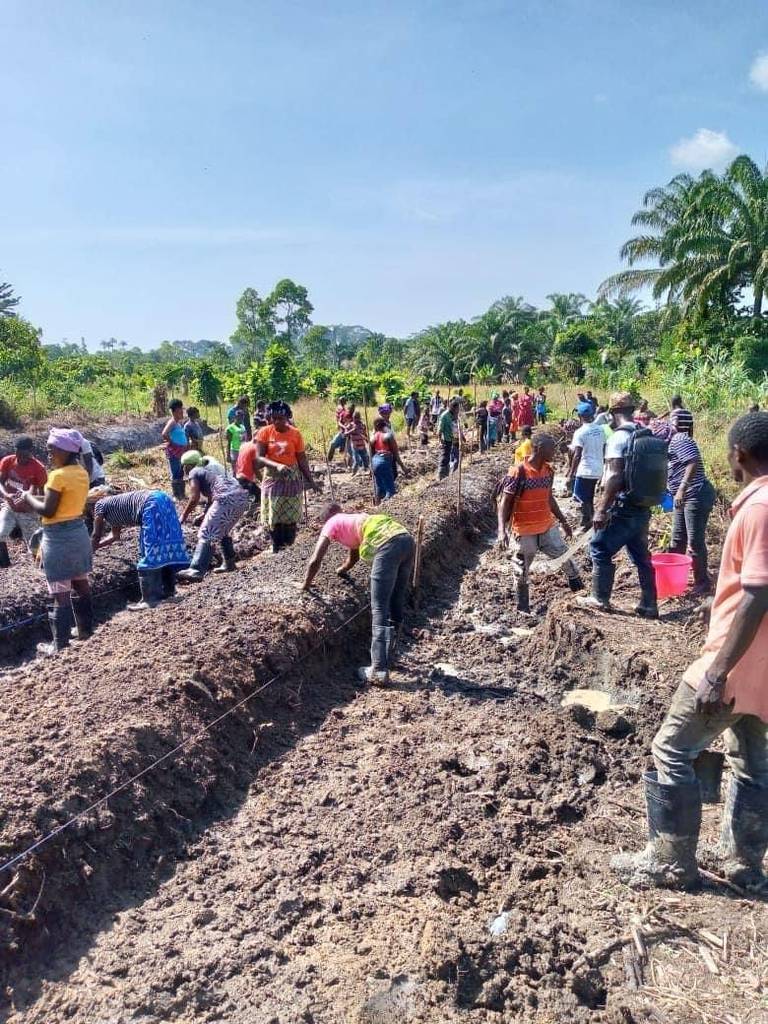
AVDP develops inland valley swamps so farming groups can grow rice through the year rather than for one season. Developed swamps let associations move to double and triple cropping.
- Swamp development with farmer associations, including a 20-hectare site at Foindu, Kenema District
- Improved seed rice, power tillers, threshers and destoners for farmer groups
- Rice-processing equipment for model farms
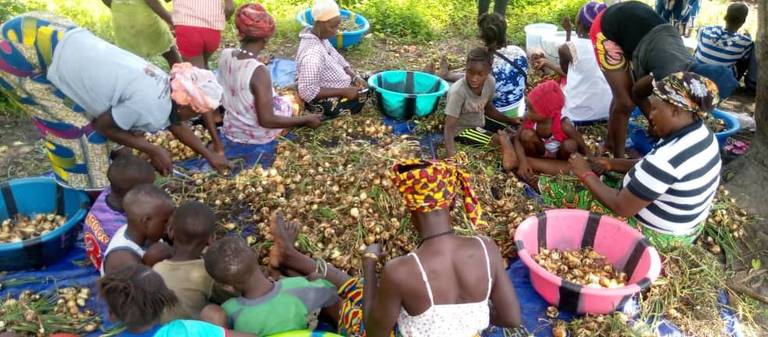
Vegetables
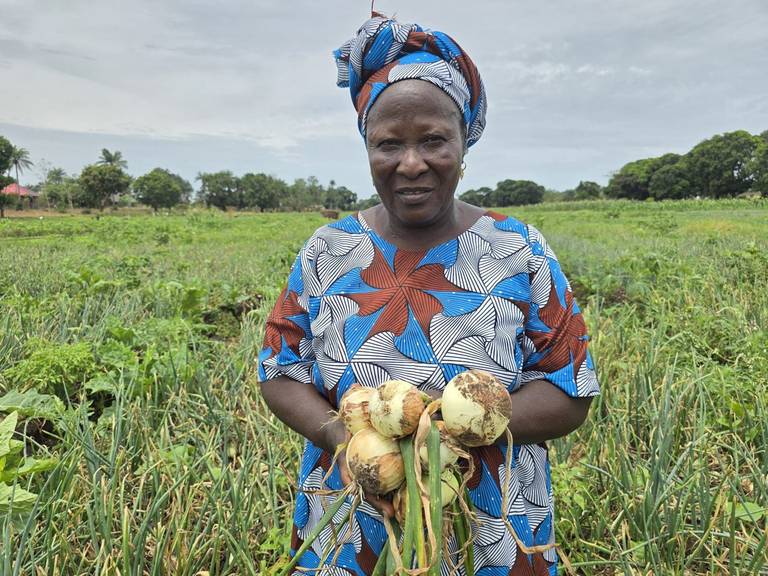
Onion, hot pepper and tomato growing gives farming households a cash crop alongside rice. AVDP supplies seed and tools and supports storage so produce keeps until it is sold.
- Bulb onion, hot pepper and tomato seed for the growing season
- Onion curing machines to cut losses after harvest
- Greenhouse equipment and compost for vegetable model farms
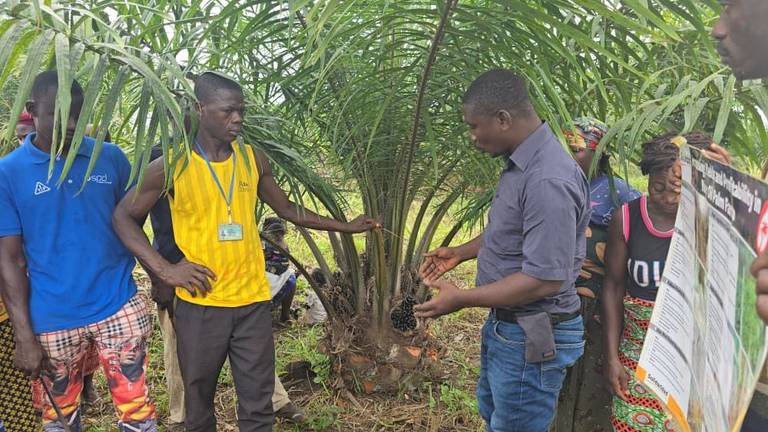
Cocoa and oil palm
High-yield oil palm and rehabilitated cocoa farms give households a longer-term income. Intercropping with nitrogen-fixing and timber trees improves soil and shade.
- High-yield oil palm for around 5,000 households
- 155,250 gliricidia and timber seedlings for intercropping in 2026
- Oil palm and cocoa multi-stakeholder platform, launched in Kenema in August 2023
Agribusiness and market access
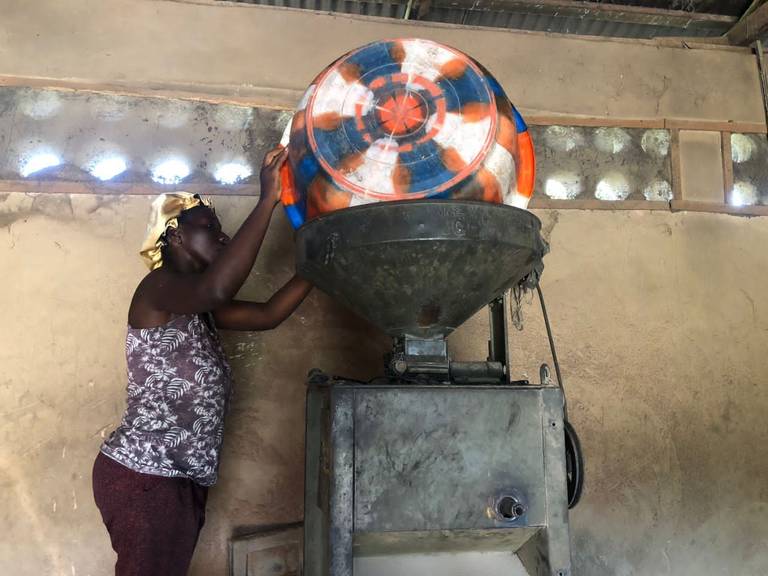
AVDP helps farmer groups run as businesses: organising into registered cooperatives, adding value through processing, and selling to reliable buyers. Processing turns harvests into products that sell for more.
- Farmer Field School groups grow into registered farmer-based organisations and cooperatives
- Power tillers, threshers, destoners and cassava processing machines for farmer groups
- Commodity platforms that bring producers, processors, agro-dealers, transporters and banks together
Rural roads and water
Farmers can only sell what they can move. AVDP builds and rehabilitates feeder roads and farm tracks, and brings irrigation to sites that depend on rainfall.
- 420 km of feeder roads tendered for rehabilitation and construction
- Supervision of an additional 75 km of farm tracks
- 20 boreholes with irrigation systems across nine districts
Climate resilience
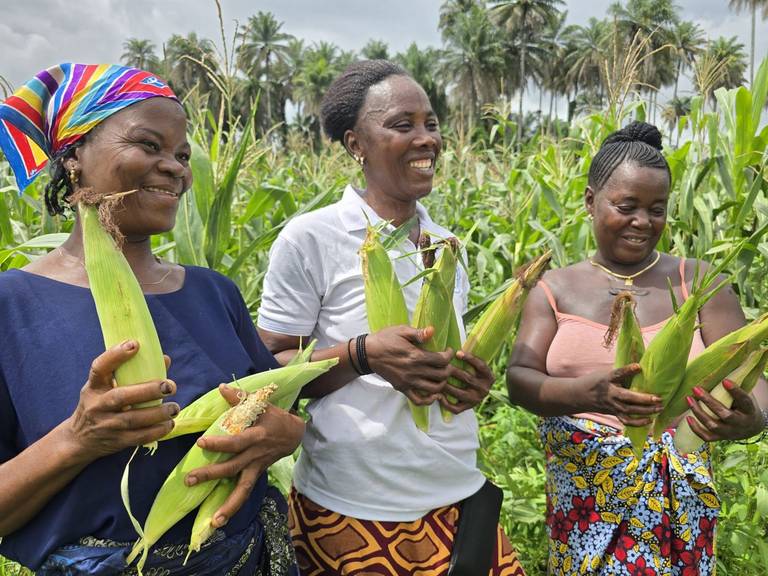
With financing from the Adaptation Fund, AVDP helps farming households cope with changing rainfall and heat, through irrigation, agroforestry and mixed cropping, working with SLMet and the EPA.
- Irrigation from boreholes for dry-season farming
- Agroforestry and intercropping on tree-crop farms
- Mixed cropping to spread risk across crops
Gender Action Learning System (GALS)
AVDP uses the Gender Action Learning System, a community-led method that helps women and men plan their future together and share work, income and decisions more fairly at home and on the farm. The project aims for at least 40 per cent of the people it works with to be women, and 40 per cent young people.
- GALS training through Farmer Field Schools, with nutrition and household financial planning built in
- 81 project and Ministry of Agriculture staff trained in GALS and gender by December 2023
- Community GALS champions who pass the tools on to other households
From seed to market
What AVDP does at each step, from the seed a farmer plants to the buyer who pays for the harvest.
Seed
Improved seed rice for farmer groups: 2,758 bushels handed over in June 2024.
Land and water
Inland valley swamps developed so groups can grow rice more than once a year.
Farming
Farmer Field Schools teach climate-smart practice; power tillers for land preparation.
Harvest and processing
Threshers, destoners and winnowers, with grain stores and drying floors.
To market
Feeder roads and farm tracks link swamps to buyers; groups sell together.
Show as table
| Step | What AVDP does |
|---|---|
| Seed | Improved seed rice for farmer groups: 2,758 bushels handed over in June 2024. |
| Land and water | Inland valley swamps developed so groups can grow rice more than once a year. |
| Farming | Farmer Field Schools teach climate-smart practice; power tillers for land preparation. |
| Harvest and processing | Threshers, destoners and winnowers, with grain stores and drying floors. |
| To market | Feeder roads and farm tracks link swamps to buyers; groups sell together. |
The farming year in Sierra Leone
When each crop is planted and harvested. Months are typical; the rains, and so the work, can start earlier or later.
- Rice (main season)Upland and swamp rice. Early upland harvests can start at the end of August.
- Vegetables (dry season)Grown in inland valley swamps after the rice harvest. Water control lets some farmers harvest two or three times a year.
- CocoaMain harvest and marketing peak from October to December, finishing by February.
- Oil palmMost palm oil is made and sold from March to June. Harvests run into June in Bo, Kenema and Kailahun.
- Land preparation
- Planting
- In the field
- Harvest
Show as table
| Crop | Land preparation | Planting | In the field | Harvest | Note | Source |
|---|---|---|---|---|---|---|
| Rice (main season) | February to March | April to July | August | September to December | Upland and swamp rice. Early upland harvests can start at the end of August. | FAO GIEWS country briefs, 2021–2025; FEWS NET, 2016–2017 |
| Vegetables (dry season) | – | – | December to February | March to May | Grown in inland valley swamps after the rice harvest. Water control lets some farmers harvest two or three times a year. | FAO AQUASTAT; FEWS NET, February 2017; AVDP onion harvest, Kaffu Bullom, March 2024 |
| Cocoa | – | – | – | October to January | Main harvest and marketing peak from October to December, finishing by February. | FEWS NET, October 2016 to February 2017 |
| Oil palm | – | – | – | March to June | Most palm oil is made and sold from March to June. Harvests run into June in Bo, Kenema and Kailahun. | J-PAL / IPA inventory credit study; FEWS NET, May 2013 |